
At the end of September we carried out a condition survey of a haulage and distribution warehouse in the West Midlands. The building has two main bays, a rear extension and a fuel filling canopy. From the yard it looked in reasonable shape. From the roof, the picture was more mixed.
This post walks through what we found and what we recommended. It is a fair example of what a roof and cladding survey turns up on a working industrial building, and why it pays to look before problems show up inside.
What we inspected
The survey covered the gutters, roof sheets, sheet end laps, ridge, verge flashings, fixings, roof lights and wall cladding across the whole building, including the rear extension and the canopy. We also checked the underside of the roof from inside the warehouse for any signs of leaks.
Every item was photographed and given a rating: satisfactory, monitor or planned repair, or urgent. The client gets a written report with the photos, so they can see exactly what we saw and decide on priorities.
The good news: the main roof
The main roof sheets were in fair condition, with light lichen and dirt but no serious damage. The ridge capping, fillers and fixings were in good order, the fixing washers were the right size, and there was no sign of water getting in on the underside of the roof.
That matters. It meant the client was not facing a full re-roof, and the money could go on the areas that actually needed it.
Valley gutters: the main problem
The valley gutters were formed in 2 mm galvanised steel, and they were showing rust and decay along their length. They were holding silt, moss and standing water. Each run had two outlets, which was enough for the roof area, but there were no leaf guards fitted, so debris was free to wash in and collect.
Standing water in a steel gutter is the start of most of the leaks we are called out to. It sits against the metal, speeds up corrosion and, once the gutter starts to fail, finds its way into the building at joints and laps.
Our recommendation was to clean out every gutter on the building in a single visit, then line the valley gutters and the canopy gutter with a Fatra single-ply membrane and fit leaf guards. Gutter lining seals the existing gutter without the cost and disruption of replacing it, and a Fatra system comes with a 25-year warranty. Where a GRP lining suits the job better, that comes with a 5-year warranty.
End laps and fixing holes
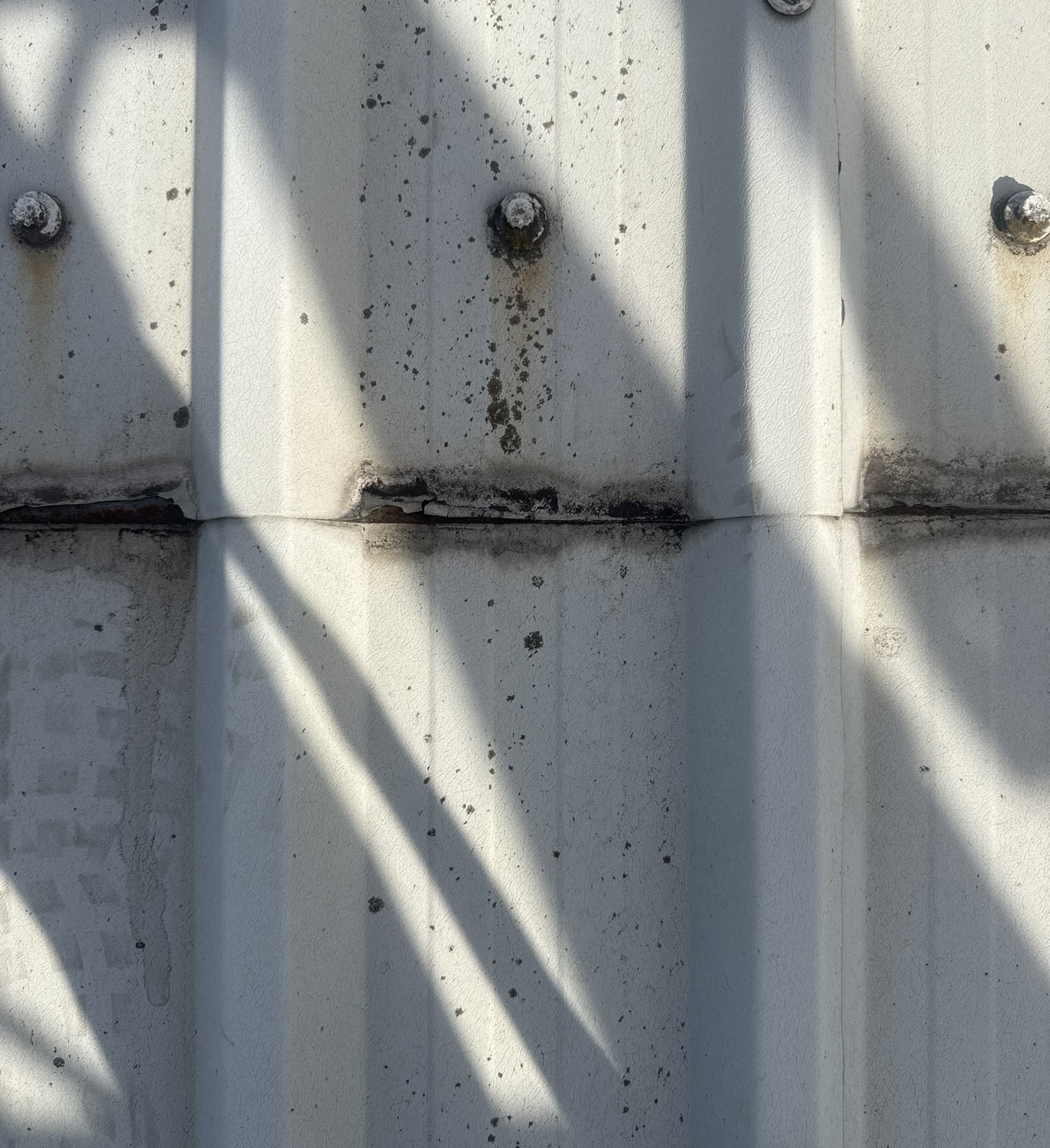
Where two roof sheets overlap, the end lap is a weak point. On the second valley, the end laps showed advanced coating delamination and cut-edge corrosion, which we rated as urgent. Elsewhere the laps were in fair condition, with early coating breakdown in places, so we flagged them to monitor.
We also found open redundant fixing holes in the roof sheets, left behind from earlier work. Each one is a small but direct route for water and should be sealed.
Flashings, roof lights and the rear extension
On the goods-in side, the verge flashing was missing fixings. Apart from letting weather in, a loose flashing in high wind can come away and fall into a busy yard, so this was marked urgent.
The rear extension had several installation faults. The rear gutter had support brackets fixed over the top of it with nothing supporting its back edge, and it was holding water and debris. The verge sat too low, with an oversized flashing fitted to cover the gap. The roof lights had been fixed with the wrong fixings, and too few of them, which leaves them at risk of wind uplift. We also found a drip flashing installed upside down.
None of these faults would be obvious from the ground. All of them would get worse over a winter.
The roof lights on the main bays were dirty and discoloured, cutting down daylight in the warehouse. Cleaning or replacing them was listed as a planned repair rather than an urgent one.
Putting the work in order
A good survey should not just list defects. It should tell you what to do first. In this case the order was:
- Clean out all gutters and clear the blocked canopy outlets.
- Refix the loose verge flashing on the goods-in side.
- Line the valley and canopy gutters and fit leaf guards.
- Treat the corroded end laps and seal the redundant fixing holes.
- Correct the fixings, flashings and roof lights on the rear extension.
Once the gutters are lined and the defects corrected, regular gutter maintenance and planned roof maintenance keep the building in that condition, rather than waiting for the next leak. Where a roof is further gone, industrial roof refurbishment is the next step.
Getting your roof looked at
With 40+ years’ experience on commercial and industrial roofs and cladding, we carry out surveys nationwide. If you have a leak, our ground-level leak inspections are free. Surveys that need roof access are charged, and you get a full photographic report with clear priorities.
Call us on 01902 653322 or get in touch online to book a survey before the winter weather arrives.