
Loose Cladding and Flashings: What to Check Before the Winter Storms
Most cladding problems on industrial units don’t start with a dramatic failure. They start with a few fixings working loose, a flashing that lifts slightly at one end, or a sheet that rattles every time the wind picks up. Left alone through a winter of storms, those small faults can turn into sheets being torn off, water getting into the building and a much bigger repair bill.
This time of year we get more calls about loose cladding than at any other point. Here is what we see most often, what you can check from the ground, and when it’s worth getting someone out.
Why cladding works loose
Profiled metal cladding is held on with fixings into the steel rails behind it, with stitching screws along the side laps and more fixings through the flashings and trims. Over the years a few things loosen that grip:
- Wind. Wind doesn’t just push on a building, it pulls on the cladding too, especially at corners, eaves and around large openings. Every gust puts a bit of load through the fixings.
- Heat and cold. Metal sheets expand in the sun and contract overnight. Over thousands of cycles, that movement can enlarge fixing holes and loosen screws.
- Washers ageing. The sealing washers under the screw heads harden and split with age, so a fixing can still be in place but no longer sealing.
- Knocks and vibration. Areas around loading doors take a lot of punishment from vehicles, pallets and doors being opened and shut all day.
Door openings are the weak spot
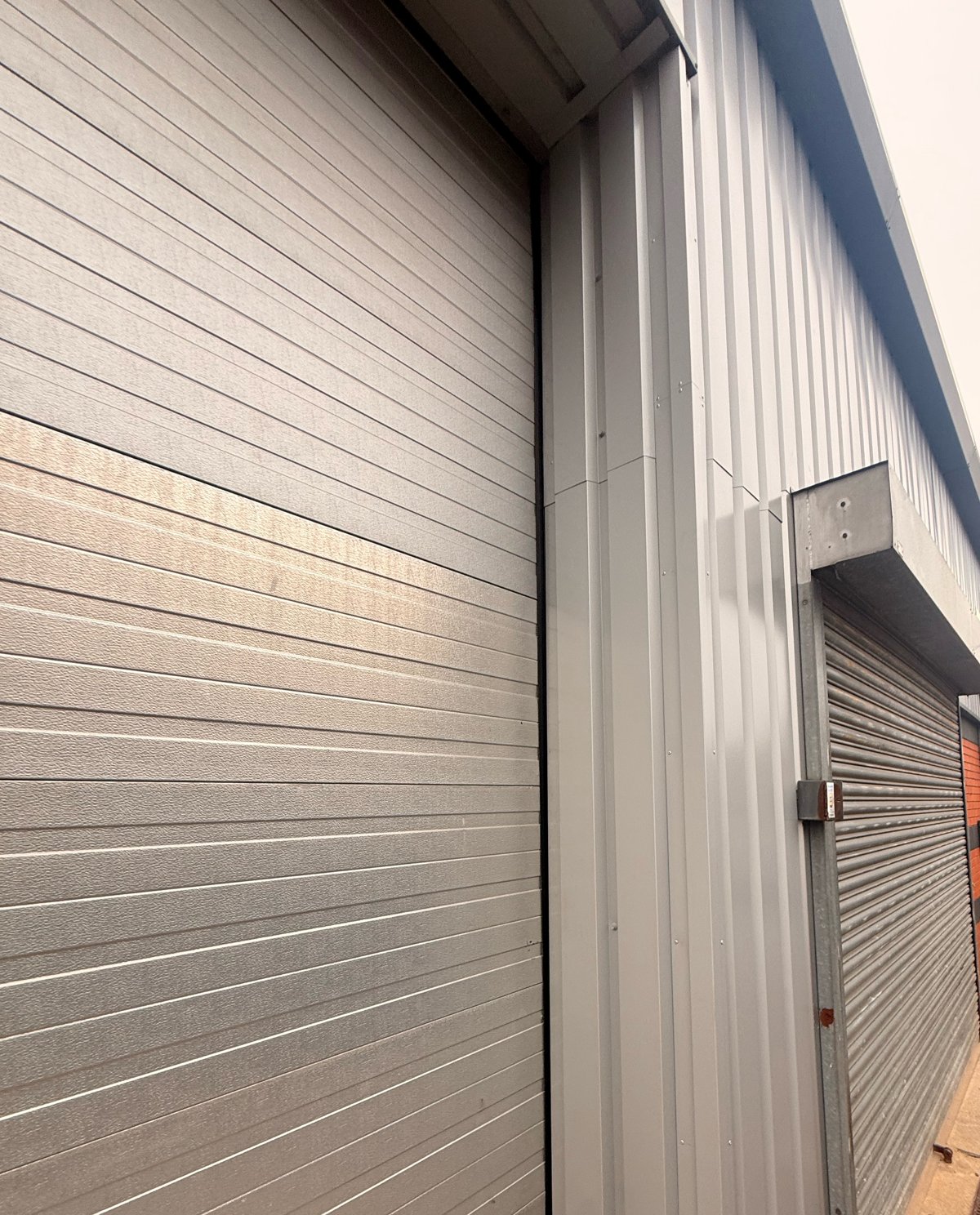
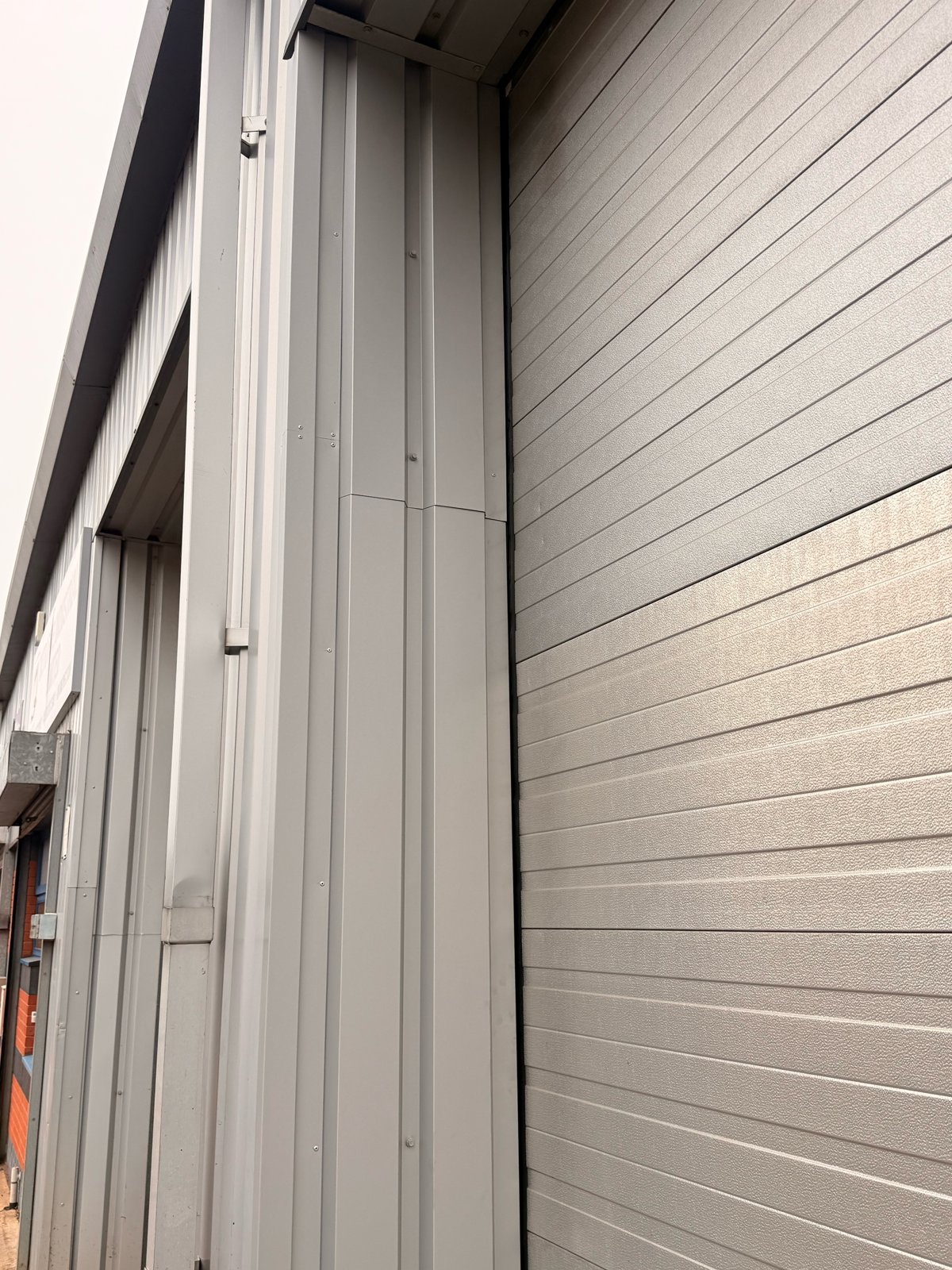
The cladding and flashings around sectional overhead doors and roller shutters are where we find problems first. Large openings break up the wall, so the sheets and jamb trims either side of them are often held by fewer fixings than the rest of the elevation. Add wind pressure every time a big door is open, and impact from day-to-day use, and it’s no surprise these areas work loose.
A recent job for a client in Rugby was a good example. On a return visit, we installed additional fixings to the vertical cladding, the flashings and the door jamb trims between a sectional overhead door and a roller shutter on the front elevation. Nothing had come off. The point was to firm the whole area up before the winter weather, so there is far less chance of a sheet or trim lifting in a storm. It was a straightforward day’s work, and much cheaper than dealing with a damaged elevation later.
What you can check from the ground
You don’t need to go up a ladder to spot most early warning signs. On a dry day, walk round the building and look for:
- Rattling or banging from the walls or roof edge when it’s windy. That’s often the first sign something has loosened.
- Flashings or trims that have lifted at the ends or along a lap, especially around doors, corners and the eaves.
- Gaps or shadows along side laps, where one sheet no longer sits tight against the next.
- Missing or rusted fixings, or rust streaks running down from screw heads.
- Damage around loading doors, such as dented sheets or bent jamb trims.
- Damp patches or water inside near the walls, which can mean water is getting in behind a loose flashing.
Take a few photos if you can. They help us judge how urgent it is before we visit.
Please don’t try to refix cladding at height yourself. Working at height on industrial buildings needs the right access equipment and trained operatives, and a sheet that is already loose can move unexpectedly.
What we do about it
Most loose cladding is a simple fix if it’s caught early. Depending on what we find, it usually means:
- adding extra fixings or replacing worn ones
- re-stitching side laps
- refixing or replacing lifted flashings and trims
- replacing individual damaged sheets, for example around loading doors
If water has already got in, we’ll trace where it’s coming from rather than just patching where the drips appear. Our roof leak investigation service covers walls, flashings and roofs.
For sites with several buildings, it often makes sense to fold these checks into an industrial roofing maintenance plan, so fixings, flashings, gutters and roof lights are all looked at on a regular schedule rather than after something goes wrong.
Inspections and surveys
We offer free leak inspections from ground level, usually next day. If we need to get onto the roof or up to the cladding to see what’s going on, that’s a charged survey, and you’ll get a clear written report with photographs. You can read more about our roof and cladding surveys.
Our teams cover England and Wales, working on warehouses, factories, logistics units, healthcare sites and offices.
Get it sorted before the next storm
If you’ve noticed rattling, lifted flashings or loose sheets on your building, it’s far better to deal with it now than after a storm. Send us an enquiry with a few photos, or call us on 01902 653322.
Request a Site Survey Send an Enquiry
No obligation. Just tell us about your building and we’ll be in touch.
IPAF · PASMA · CSCS · CITB · KeeLine, Kingspan, Euroclad and Alwitra approved installer