
Industrial Gutter Replacement or Lining? How to Decide
When an industrial gutter starts leaking, the first question most facilities managers ask is whether it can be lined or whether it has to come out. Both are good repairs in the right place. The trick is knowing which one the gutter in front of you actually needs, because lining a gutter that has already failed is money spent on the wrong fix.
A recent planned gutter clean we carried out for Unipart is a good example of how we make that call.
What we found on the Unipart gutter clean
The visit was a routine gutter and downpipe clean on an office block roof. Before we started, the gutter was packed with autumn leaves and silt along its full length.
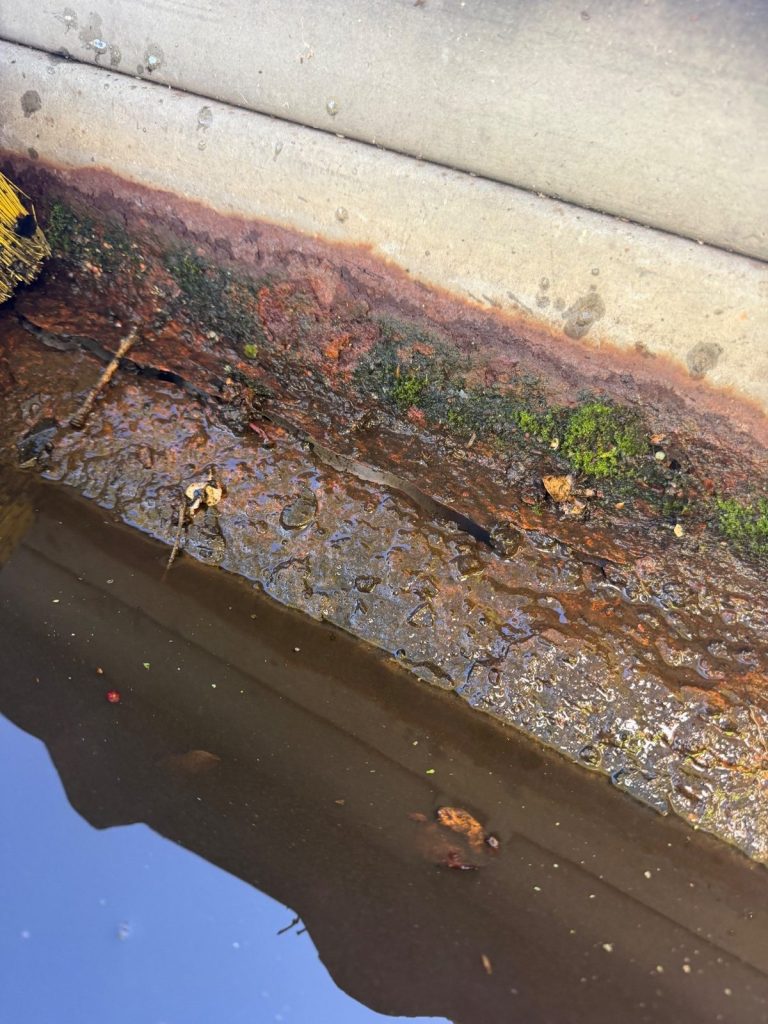
Once it was cleaned out, the real problem showed. The steel gutter was rotten and splitting under the weight it was carrying, with a bad crack running down the centre of the sole. Standing water was sitting in the run even after the clean, and the surface of the metal had corroded right through in places.
A gutter in that state is past lining. A liner needs a sound gutter underneath it to sit on and be bonded to. If the steel is cracked and sagging, it will keep moving, and the liner will be pulled and stressed until it fails as well.
So our recommendation was to replace the full run of gutter, not just the cracked section. Patching one length of a rotten gutter only moves the problem along to the next joint. Left as it was, the gutter would soon start discharging water down the wall cladding below. The existing downpipes were in good order, so they can be kept and reused with new seals, which keeps the cost and disruption down.
We also picked up that the wall abutment flashing at the top of the roof slope was old and failing, and recommended replacing it at the same time, while access is already in place.
When gutter lining is the right answer
Most of the industrial gutters we look at do not need replacing. If the steel is corroded on the surface but still structurally sound, holds its shape and is properly supported, lining is usually the better option. It seals the whole gutter in one go, there is no need to strip out and replace steelwork, and the building can keep working while we do it.
We install single-ply and GRP gutter lining systems. A Fatra single-ply system comes with a 25-year warranty, and a GRP lining comes with a 5-year warranty. You can read more on our gutter lining page.
The detail that makes or breaks a lining job
Lining only works if it is done properly, and the outlets are where it most often goes wrong. On a recent roof survey for a healthcare supplier, we found a valley gutter that had been lined in rubber by a previous contractor. The gutter itself was sealed, but the outlets had not been treated when the lining went in. Water was still sitting at the outlets, and they had rotted, so the job was failing at its weakest point.
When we line a gutter, the outlets, stop ends and overflows are part of the job, not an afterthought. Blocked or missing weir overflows are put right at the same time, so that if an outlet does block, water spills safely out of the gutter rather than into the building.
Quick checks: line it or replace it?
From the ground or a safe access point, these are the signs we look for:
- Likely suitable for lining: surface rust, leaking joints, failed old sealant and standing water, but the gutter still holds its shape.
- Likely needs replacing: cracks or splits through the sole, holes you can see daylight through, sagging between supports, or steel that flakes away when touched.
- Needs a closer look either way: water running down the wall cladding, stains on the inside face of the wall, or leaks that come back after previous repairs.
Never walk a roof to check for yourself. Many industrial roofs have fragile sheets and rooflights, so leave it to trained operatives with the right access.
Keep it from getting this far
The Unipart gutter was only found because the gutter was being cleaned on a planned visit. Regular gutter maintenance and planned roof maintenance mean defects like this are photographed, reported and priced before they turn into a leak over stock, machinery or office space. Every ABS visit comes with a written report and photos, so you can see exactly what we saw.
If a gutter has already failed, it can often be dealt with as part of a wider industrial roof refurbishment, along with flashings, fixings and end laps, so access only has to be set up once.
Not sure what your gutters need?
If you have a leak, we offer free leak inspections, and where a full look at the gutters and roof is needed, we can carry out a roof and cladding survey with a clear, photographed report and recommendations. We work with commercial and industrial clients across the Midlands, the North West and beyond.
Get in touch with us or call ABS Cladding Services on 01902 653322.
Request a Site Survey Send an Enquiry
No obligation. Just tell us about your building and we’ll be in touch.
IPAF · PASMA · CSCS · CITB · KeeLine approved installer