
Rooflights are easy to forget. They sit flush with the roof, nobody sees them from the ground, and they fade so slowly that most people only notice when the lights inside are on all day. By then the rooflights are usually covered in a layer of dirt, moss and algae that has been building up for years.
This week our team cleaned the roof of a commercial unit in Birmingham, including every rooflight across the main roof. Here is what the job involved, what cleaning can and cannot fix, and why it is worth doing before winter.
What the job involved
The work was the first phase of a planned programme on the building: a full roof clean, a gutter clean, and replacing damaged cladding sheets on the front elevation. The roof sheets and rooflights were cleaned and photographed before and after, so the client has a clear record of the condition of the roof without anyone from their side needing to go up.
The second phase is booked for next week. That covers replacing the damaged rear cladding sheets, covering holes in the rear wall, and inspecting the roof’s fall restraint line. Splitting the work this way means the most visible and most urgent items are done first, and the building stays weathertight throughout.
Why dirty rooflights matter
The first cost is daylight. Rooflights are there to light the working floor for free, and a rooflight coated in green and black growth lets through a fraction of what it should. The result is lights left on through the day, higher energy bills and a darker, less pleasant place to work. The photo below was taken from inside the unit once the cleaning was done.
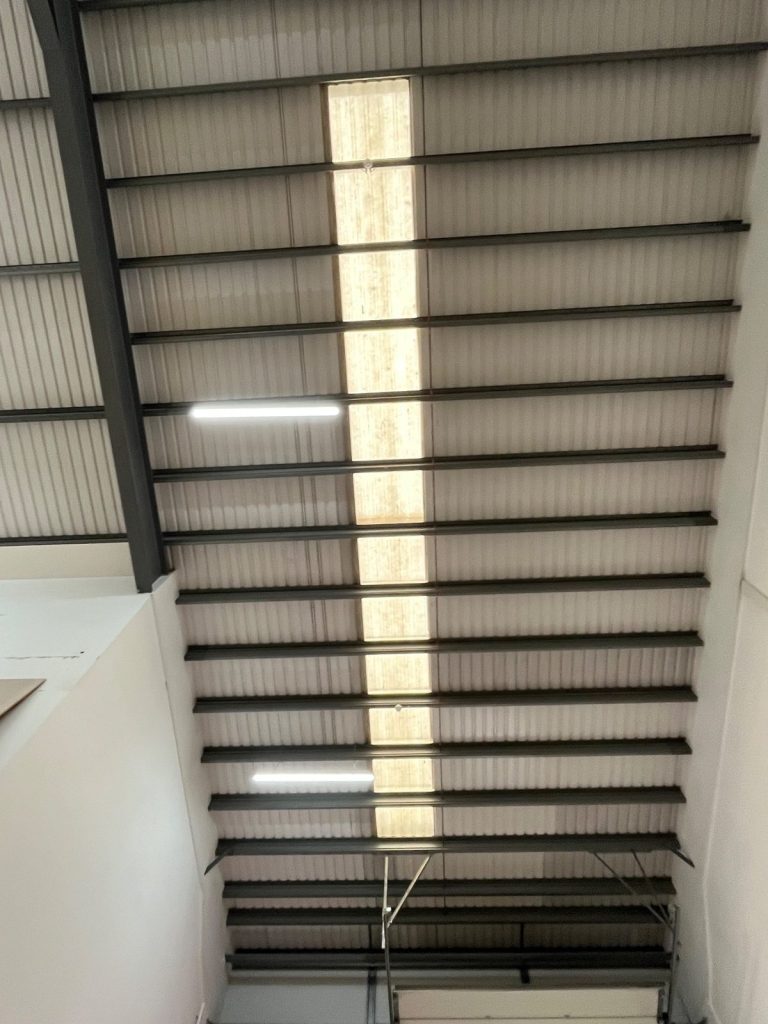
The second cost is hidden damage. Moss and dirt hold moisture against the rooflight and the fixings around it, and they cover up cracks, splits and failed seals. Cleaning is often the first time in years anyone has had a proper look at the rooflights, and that matters, because a split rooflight is a common source of leaks that are hard to trace from inside.
Debris washed off dirty rooflights and roof sheets also ends up in the gutters. Cleaning the roof and the gutters on the same visit, as we did here, stops one job undoing the other.
What cleaning can and cannot fix
Look closely at the before and after photos and you will see the rooflight is much cleaner, but it is not crystal clear. That is normal on an older roof. Cleaning removes dirt, moss and algae from the surface. It cannot reverse the yellowing and clouding that rooflights pick up over many years of sunlight, because that is a change in the material itself.
So once a rooflight has been cleaned, there are three possible outcomes:
- Clean and sound. Keep it on a regular cleaning schedule and check it at each visit.
- Clean but discoloured. It still keeps the weather out, but it will never let in as much light as it did. Replacement can be planned for a convenient time, often alongside other roof work.
- Cracked, split or brittle. It needs repair or replacement before it lets water in or becomes a safety risk.
Where rooflights are near the end of their life, replacing them as part of an industrial roof refurbishment is usually the most cost-effective route, because the access is already in place for the rest of the roof.
A word on safety
Rooflights are fragile, and they get harder to spot once they are dirty and blend in with the roof sheets. Nobody should walk on or near them without proper safety measures in place. Our teams work to method statements and risk assessments on every roof, and we also install and inspect roof safety lines and fall restraint systems, which is why an inspection of the existing line is part of the second phase on this job.
How often should rooflights be cleaned?
For most commercial and industrial buildings, once a year is a sensible starting point, and more often where there are trees nearby or a lot of bird activity. The easiest way to make sure it happens is to include it in a planned preventative maintenance (PPM) programme, alongside gutter cleaning and a general roof check. You get a photo record at every visit, and small problems are found while they are still small.
If you are not sure what state your rooflights and roof sheets are in, a roof and cladding survey will tell you. If you already have water coming in, we offer free leak inspections to find where it is getting in.
Book a roof and rooflight clean
We clean, repair and replace rooflights on commercial and industrial buildings nationwide, from our base in the West Midlands to sites across Birmingham and beyond. Our refurbishment work is backed by warranties, including 25 years on Fatra single-ply systems and 5 years on GRP.
To get your roof booked in before winter, contact us or call us on 01902 653322.